Tuesday, 31 December 2019

Out with the old, in with the new


Sometimes the clouds break and the direction is clear

So a decade draws to a close, one where we’ve seen the rise of fake news, increasing concerns about extremism, bigotry and violence. A decade where reality TV, social media and celebrity seem to take the place of real life and real people, where the message of consumerism can drown out the truth that happiness doesn’t come from having more but from doing more - caring, sharing and connecting.

Yet at the same time we’ve seen a decade where communities have come together when facing disasters such as floods, storms and heatwaves. A decade when people have been shocked and rallied to help when faced by refugees fleeing war and famine. A decade where the importance of nature, our environment, our health and wellbeing and protecting the ecosystem we are part of has finally gained attention.


Coming together to fight for a future for all

A decade when people power has started to come of age, to grow, to transcend national boundaries as people come together to demand change. From the ‘Arab Spring’ to the Occupy movement, from school strikes for the climate to Extinction Rebellion, ordinary people are having their say, are standing up to be counted. The new decade provides opportunities for a real shift as the challenges are faced and we all engage to protect our future.

2020 a decade for our futures

Wednesday, 13 November 2019

Winter is coming

As we reflect on the changes in our weather, those we perceive as been seasonal as well as those we may feel result from climate change, one thing we can recognise is that nothing lasts. Whether it is the summer sun and warm breeze or driving rain, gales and snow. The same applies to our own thoughts, feelings, emotions and mental states.

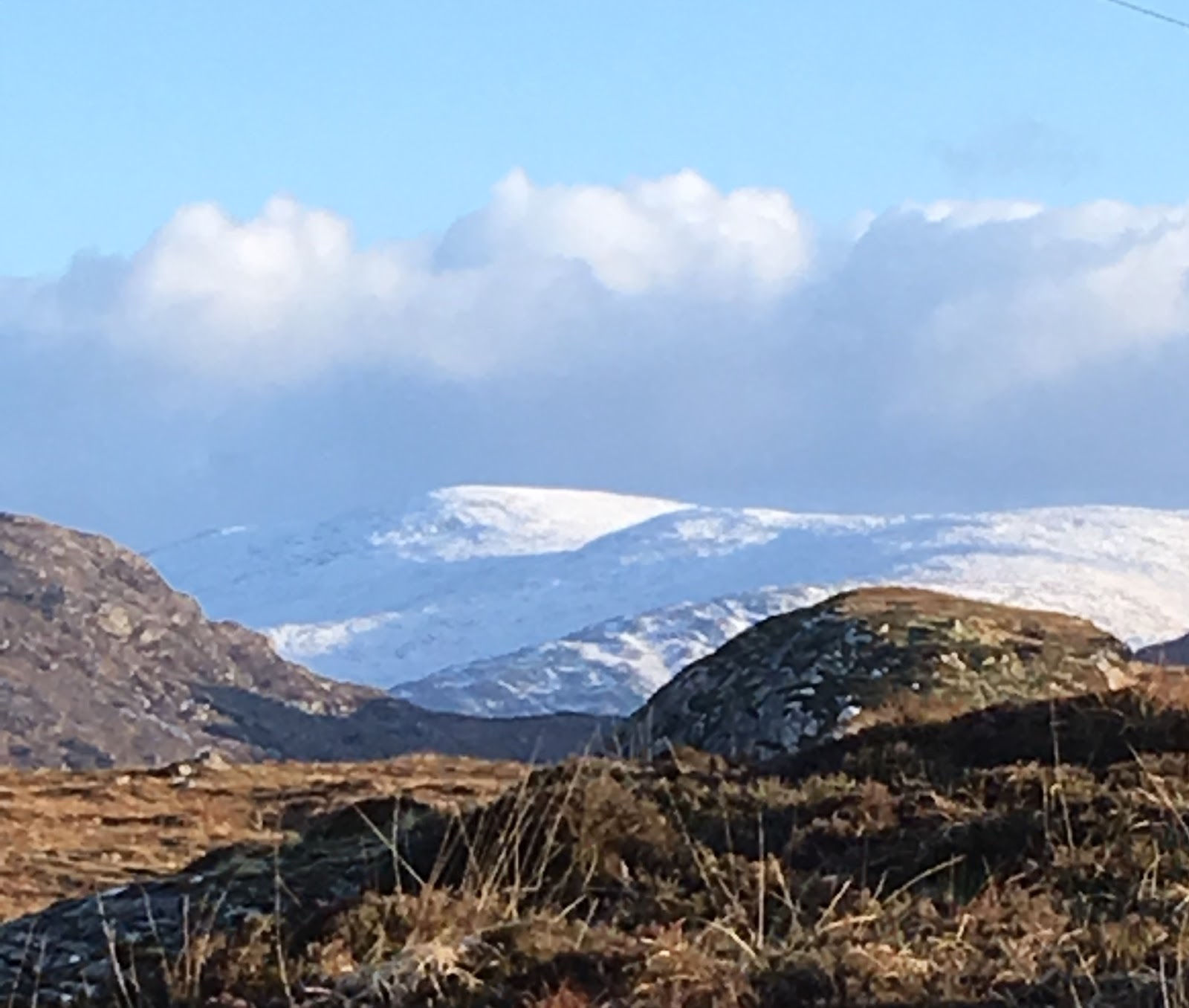
A wintry scene, but actually late spring on the Isle of Harris

Mindfulness practice helps us recognise that thoughts are not facts and that some thoughts may be more emotionally charged, more repetitive than others. With practice, such recognition allows us to respond more creatively rather than been stuck with the old habitual reactions. With today’s concern about the impact of climate change some are becoming increasingly anxious. The thoughts entering our awareness range from sorrow at the decline in species, the destruction of habitat, through fear for our own future, to anger at the inaction of governments and the denial (or rather attempt to obfuscate, sow confusion and doubt) by large corporations (just 100 companies are responsible for more than 70% of climate emissions Climate crime? ).

But just as the weather and ultimately our climate will change, so can our own responses. Instead of living in fear and doubt we can educate ourselves about the truth behind the headlines. We can learn about our own impact, and appropriate responses. We can take action to reduce our impact and encourage others to do the same, raising awareness and challenging behaviour. By practicing living with an awareness of our connection and responsibility to all species, to the planet, our life support system, then we can settle our own minds, gain more emotional stability and have a greater sense of wellness and positivity for the future.

Tuesday, 29 October 2019

What happens at Xmas?

A winter campsite can be more stimulating than hours of old films at Xmas

Lots of us are talking about the climate and ecological crisis we are facing and wondering about our own contribution to the problems and whether we can have a lesser impact on the world around us. Certainly reducing our carbon footprint (check Carbon footprint ) can have an impact, whether on our own finances (buying less, saving more), our health (food and exercise choices), our communities (sharing our knowledge and experience) and on the planet itself. However what happens at Xmas?

TV advertising would have us believe we need the latest gadget, more food than some see in a year, we need to jet off on holiday, we need to consume as much as possible, and of course share our consumption on social media to influence others to do the same. Why? Does it makes us better / nicer/ kinder people? No it means we contribute more to those companies that are already causing the biggest share of of the problems. The same companies that make gross profits regardless of ecological impact, the ones who use excess packaging, make things we don’t really want or need, that don’t last, can’t be repaired, end up in landfill. The same companies that don’t pay enough tax (in any country), that pay massive executive salaries while placing the lowest paid on zero hours contracts (check Ken Loach’s film ). It is time we engaged in protecting the vulnerable, protecting the planet, protecting ourselves.

Waves crashing, sight and sound, maybe all our senses


Many of my clients complete a sense awareness inventory, where they list what makes them smile, makes them happy, brings them pleasure, makes them feel good. They do this for each of their senses, sight, hearing, taste, touch and smell. While some answers will stimulate others e.g. the smell of fresh bread and the taste of fresh bread: the sight of waves crashing and the sound of pebbles churning in the surf, what becomes obvious is that most answered to the questions involve nature and the vast majority are free. In which case what are we doing spending so much on illusions of happiness. This Christmas go for a walk, go to the beach, smile, don’t spend so much.

Saturday, 1 June 2019

Engaging mode


Having been fortunate enough to be able to visit a variety of places in the last month, everything from remote islands to capitol cities, I've been reminded of what it really means to engage with our surroundings, with our environment. To actually move from 'doing' mode, speaking, taking photographs, reading maps and guides; and entering 'being' mode, engaging all our senses.
Research shows that the views that have the most calming
influence are those with mountains, the sea and forests

Too often it seemed that wherever people were, along sea shores, around harbours, on mountain ridges even on city streets there were people too busy to actually stop and notice. Too busy to smell the flowers, feel the cold of the breeze, the warmth of the sun, the sight of the eagle soaring overhead, the sound of the goslings swimming in the canal. 
The weather changed in a few hours leaving a good covering of snow on higher slopes
Instead of actually experiencing for themselves they walked around with the smartphones and tablets held in front of their faces, watching the limited view afforded by the screen in from of them rather than engaging with the better view which can never be replicated on screen, the view through their own eyes. I watched people pile off tourist coaches, take photos and get back on the coach for the next viewpoint. I'm reminded of lines from the famous poem -


What is this life 
If full of care
we have no time
to stand and stare?

Integration


A recent trip to Amsterdam (all without flying, instead using trains, buses, ferry, and walking) provided an opportunity to see how some cities seem to manage transport, environment and community integration more successfully than others.
A group of kayakers travelling through the city
Yes there were cars but they were strictly controlled with cyclists and walkers often having priority. There were also lots of electric vehicles accompanied by charging points on every street. While many think this has happened by virtue of the Netherlands being flat, the reality is that the infrastructure is a result of citizens campaigning for good public transport, for good cycle infrastructure, to limit motorways through and around the city to have great public transport, buses, trains, trams, metro, river boats, ferries, cycle parking etc. But it is not only about transport, every street seemed full of green, with tree lined avenues, planters, hanging baskets and flowers everywhere.
Lots of cycles and the space to ride them!
 And everywhere there was room to walk, from good road crossing points to parks and footpaths, all promoting a culture where walking and cycling seems the rule rather than the exception, where an appreciation of the environment includes having the space to stop, to relax.
Great areas for walking for health too

Engaging practice

Today is the start of Buddhist Action Month, a period when Buddhists around the world show how their Buddhist practice, their seeking enlightenment, their seeking to help all beings, is achieved not through sitting on a cushion meditating but through getting out into their communities, into the natural environment we are all part of and showing how Buddhist practice means caring for others, caring for places, caring for our planet.

Thursday, 14 February 2019

New Year, New You


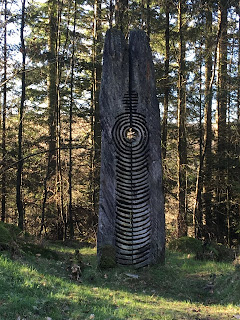
Sculpture trail in a local forest

It’s the same jaded headline we see every year. By now you’re probably fed up with all the TV and radio programmes, the facebook advertisements, the endless barrage of good ideas for a new ‘you’ this year. Just follow the latest diet, cooking method, exercise regime, celebrity cure and miraculously you’ll be fitter, thinner, healthier, all without any effort, leading us to feel guilty for not trying! Even worse, the dark, damp days of winter can be particularly depressing making these suggestions even more unhelpful.

The fact is you probably already know what to do to feel better, and it’s not difficult. Just think of things that make you smile or create a sense of wonder. Things like watching a glorious sunset or a kestrel hovering at the side of the road, the smell of fresh mown grass or the sound of laughter, the touch of of cold on your face during that post-Xmas walk. Making the effort to notice, to engage with our senses can help us to let go of the constant bombardment of thoughts that seem to overtake us as we enter each New Year. I should start to run, I should join a gym, I should eat less. While all these may be true, practising ‘shouldism’ isn’t helpful and that’s why our New Year’s resolutions tend to be short-lived.
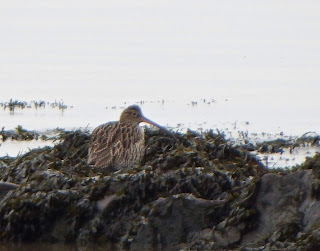
Curlew spotted amongst the rocks
One answer is to commit to noticing, to enjoying, what is actually around us, much of it totally free, just open the door and go outside. There has been much publicity about ‘Nature Deficit Disorder[1]’ mainly in relation to children and especially considering time spent outdoors or in front of computer screens. But it’s not just our kids we need to worry about, it’s us too. We’re in danger of many so-called ‘life style’ conditions, from obesity to heart disease, diabetes and strokes. While the evidence may be unclear about the role of genetics and other factors it is clear that we are increasingly showing the signs of anxiety, stress and other disorders linked to how we choose to live our lives. 

We need to watch less reality TV and get out into the reality that surrounds us, the real world that is all around us. Whether local mountains, fells and lakes, to the forests, woodland and beaches. From your local country or urban parks, to canals and even public areas such as common land and cemeteries. All present us with the opportunity to get outside, be in fresh air rather than traffic fumes, get some exercise no matter how gentle, and to appreciate there’s more to life than immediately answering emails and constantly posting your latest sandwich choices to facebook.

Science tells us we have developed to be connected to nature, it’s how we know where and when to grow food, what the weather will do, even what time of day it is. We learned to be attentive to changes in the seasons, to movement, to threats and to things that bring pleasure. This attentiveness or attention comes in different forms, we can choose to pay attention, such as when we are trying to complete a piece of work, this directed attention can require lots of effort and wears us down over time. We also have a built in mechanism to simply notice what’s around us. This involuntary attention requires no effort, hence why we can be easily distracted, but we can use this and directed attention when we go outside, into the natural world we are after all part of.

Involuntary attention helps us notice things, such as the geese flying overhead, the warmth of the sun, the stars in the night sky. We can then engage with these things, directing our attention to them, noticing how we feel. By getting outside and doing these we can let go of the things that were stressing us, even if only for a short time. Again the evidence is that contact with nature can lower pulse rates, reduce cortisol levels, and improve our immune systems. So what to do next?

Start by just getting outside the house and looking around. See if you can notice something you haven’t seen before. As you pause for a while notice your breathing. Try finding a ‘sit spot’. This is somewhere you can visit on a regular basis, a park bench, somewhere to sit on a path, even a quiet bus stop or pulling the car into a lay-by where you can appreciate the view. A sit spot is a place where you feel safe to stop and notice not only what is around you, but also how you feel when you stop. When your ‘to do’ list is put on hold for a few minutes and you give yourself permission to simply be still.
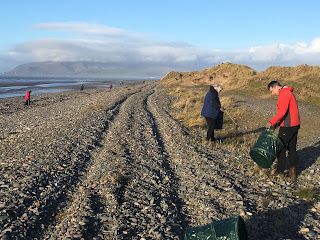
Volunteers on a beach clean
If you are able go for a walk, a cycle ride even better (perhaps to get to your ‘sit spot’). But it isn’t just about exercise, there are other opportunities to get outdoors too. Try volunteering, there are many action groups, horticultural, litter picking, wildlife and other groups. All provide the opportunity to be outdoors, getting fresh air, enjoying some peace and are all free. Even better you get the added satisfaction of seeing other things flourish, having a sense of achievement.  A version of this blog focused in the South Lakeland Peninsula of Cumbria is available here


[1]Louv R. (2006) Last Child in the Woods, Algonquin Books, Chapel Hill, U.S.A

Tuesday, 27 November 2018

More Connections

Following on from the last post, a key element of connecting is actually getting out and the old saying is still valid, 'the first step is the hardest'. It is often too easy to say 'it's raining', 'I'm busy', 'it'll be dark soon'. The key to the healing power of Nature, to be connected to the animate and inanimate world we a part of and to be healed by it is to get out and notice!
Views from 'bathing' benches in the Galloway Forest

Even if you visit the same place everyday there will always be something different to see, and again this means you have to be there, you have to look, to notice, to develop your observational skills. We can all notice something by accident, whether a view, a sunset, an eagle or a flower. The way we heal ourselves in nature is to keep repeating the accident! To notice not just the big, the dramatic but the subtle, more mundane as well. As always we need to be there, to notice, to reflect. To be mindful of all around us.

Preparing lunch!


We can spot creatures of all sizes

Another lunch time option!
Sometimes the colour palette presented is enough to help calm, develop a sense of appreciation


Monday, 19 November 2018

Language

Another great Kendal Mountain Festival #kendal18. Inspired by the great work of the amazing outdoor equipment company PatagoniaThe Rivers TrustSave Our Rivers and others including some terrific climbers, kayakers and mountaineers, we are now looking at how we can participate in more action to help protect and sustain our planet.

We also attended a session entitled Connection to Nature which was a discussion with a number of authors including Jay Armstrong, editor of the Elementum Journal. The idea was to discuss what is so important about the embodied experience in nature? To discuss what it is like to go out into the wilds (however you define or experience them) and how we come back and share our stories. There was some reticence from the panel about discussing Healing and Nature. While some found this surprising, to me, and certainly in the philosophy and practices of Naturally Mindful and Tao Mountain it is not Nature which heals (remembering that we too are part of Nature and sometimes Nature can be vicious, destructive and deadly). Instead it is our connection, our engagement, our respect and support for the world around us which is healing. In other words to feel well, to feel whole, we need to engage, to come away from our screens, to look up and notice, feel, smell, taste, listen, to the waves, the wind the rain, the rutting of stags, the cry of the peregrine. When we do this our perspective changes and we start to heal ourselves by recognising our place in the Nature of things.

A wet, windy day above Ullswater, not the typical healing space
 but  one that engaged all the senses, provided a sense
 of achievement and helped us feel we belonged in this space

Get Active

Great weekend at the Kendal Mountain Festival, our chosen theme was environmental activism. It was great to see the good work being done by adventure activists around the world. Big thanks to Patagonia for sponsoring some of the event and speakers.

Monday, 29 October 2018

Introducing Forest Bathing

Programme participants on a trail
Many people are hearing about the concept of ‘Shinrin Yoku’ a Japanese term often translated as ‘Forest Bathing’. Shinrin - Yoku has been seen as a formal activity in Japan since 1982 when it was launched by the Forest Service as a means to encourage the use of forests for health and relaxation. While this term is being used in the national press (see Telegraph link below), there are many other similar examples such as the concept ‘waldeinsamkeit’, the idea of being alone in the woods and at one with nature (Carlile, 2015) and the Kurparks of Germany (De Wit, 2014) which have been in use since the 1850s to encourage walking and sitting in specially created, often municipal forests, some linked to natural springs and spas.
My own work using forests, woodlands and community parks, incorporates mindfulness, sense awareness and a range of other activities such as walking and chi kung. In fact my work in this area is referred to in a report for the UK Forestry Commission (Ambrose - Oji, 2013). Many have benefitted from this approach, one person described going into the forest as having a 'shower of green' that washed away the stress of the day!
Visiting a Forest, a nearby woodland, or simply watching tress in a local park can be a simple way of escaping from the frantic world around us, letting go of the technology which seems to cry out for our non-stop attention and finding a place to stop, to appreciate what is 'real' not 'fake'.
Ambrose-Oji, B. (2013) Mindfulness Practice in Woods and Forests: An Evidence Review., Research Report for The Mersey Forest, Farnham, Forest Research.

Carlile, A. (2015) Nature 365. Richmond, Aus. Hardie Grant Publishing

De Wit, S. I. (2014). Suburbs and super-nature: How the Wasserkrater exposes an invisible landscape.

Monday, 10 September 2018

Connections

Connecting flowers, butterflies, pollination, food chains

Connection

There are times when connections may be hard to see, to understand, to value and there are definitely times when many of us may feel disconnected from the world. Our actions can seem like they are of no major consequence, and we may feel like we exist in our own vacuum. Yet, the truth is that our simplest thought or action - the decisions we make each day, and how we see and relate to the world - can be incredibly significant and have a profound impact on the lives of those around us, as well as the world at large. The earth and everything on it is bound by an invisible connection between people, animals, plants, the air, the water, and the soil. Insignificant actions on your part, whether positive or negative, can have an impact on people and the environment that seem entirely separate from your personal realm of existence. Staying conscious of the interconnection between all things can help you think of your choices and your life in terms of the broader effect you may be creating. 


Staying conscious of your connection to all things can help you think of your choices in terms of their impact. We are powerful enough that what we do and say can reverberate through the lives of people we may never meet. Understanding that you are intimately connected with all things and understanding your power to affect our world can be the first step on the road to living more consciously. Maybe think about connections when you are deciding where to invest your energy in the future.

Monday, 13 August 2018

Perspectives

Perspective can be about choice, which viewpoint to adopt

Much of our work is done outside, in forests, on mountains and on the sea shore. One of the things participants learn quickly is the power of recognising that we can choose a viewpoint. We can also choose to look back, look forwards or simply look around us. The key is to look AND to notice, to actually be alert to what we see and to how we respond to it. On the walk pictured we saw a Peregrine falcon take a wood pigeon in flight, feathers everywhere, result - a dead pigeon, or a meal for a partner back on the nest with chicks waiting to fledge? A piece of drama played out in front of our eyes or an example of how suddenly life can change? Perhaps all of these, and in our work we always use reflection and discussion to draw out individual perspectives, examining how what we learn can be applied in our daily lives.

For example a driver overtakes very fast, pulling sharply in front of you to avoid another car. Do you allow rage to develop, shocked at their behaviour or be thankful that you were able to avoid a collision? Do you think they were a bad driver or that they were rushing to the hospital where their partner was giving birth? It is all about perspectives.

Friday, 20 July 2018

Healing Myself - Forest Therapy


We've all heard the phrase 'physician heal thyself' and for me that has been necessary in the last few months. After contracting pneumonia I didn't rest well enough to fully recover and consequently suffered from the viral infection Shingles and at the same time a bacterial infection in my eyes. Typically (and I'm sure this effects most of us) I still didn't rest fully, instead getting bored and frustrated, all adding to low mood, more symptoms and slower recovery.

Then someone asked what as a health professional I would advice my clients to do and that prompted a more relaxed, fulfilling and more mindful journey back to wellbeing. Using the Mindfulness in Nature and Shinrin Yoku (forest therapy) principles I teach to others, I planned to recover rather than rest. This plan did include long and sustained periods of rest and relaxation but now as a scheduled part of the process rather than the 'Bust' part of the Boom and Bust cycle many with an illness are familiar with, one minute getting on with life fully then the next being shattered from doing too much, too soon.

My activities included daily meditation (for slightly shorter sessions to be less of a 'must do this' activity) initially in the morning and then as a means of preparing to go to bed too. Daily walks, but as mindfulness practice rather than exercise (of course they can be both and as I recovered I could choose to be faster and still notice surroundings, thoughts and body though I find the slower 'Forest Therapy walk more fulfilling).

When with clients we often spend periods in silence and also in joint reflection, so some of my walks included a partner so we could share what we noticed and both have the benefit of time together and in silence. Being in a forest has great therapeutic benefit, there can be stillness and movement, new sights and sounds and I often find being under the green canopy of leaves with dappled sunlight breaking through is almost like a shower washing away depression, fatigue and other symptoms.

Sunday, 28 January 2018

Right to Roam


We spend a lot of time in Scotland, working, having fun, simply being in the outdoors. This film illustrates why.

Wednesday, 3 August 2016

Virtual Reality, Augmented Reality, or simply naturally real?

Over the weekend I've seen people wandering around holding up their iPads filming the view rather than actually looking at it themselves. This means they only capture what is in front of the lens rather than the whole view. Even if they then watch the film many times, they are still missing something. I also watched as a group of young people sat at a viewpoint looking at their mobiles, one playing a soccer game, one playing a tetris type game, one messaging and another playing Pokemon, all missing what could be seen, the reason for the viewpoint and the effort made to reach it! once they were shown they became enthralled in the real world around them rather than the virtual one created by others.

Golden banded dragonfly

looking across the valley

one of the local red squirrels

Osprey on the nest (in the valley above)
All these were seen in just a small period of time, but you need to open your eyes and look, take in your surroundings. Don't get your nature fix from a screen, it is much more beneficial to experience nature and our place in it than the easy option of virtual space.

Saturday, 23 January 2016

Ray Mears and The Path of Grey Owl

In this short film some of the ideas we teach on our courses are highlighted. The beauty of the countryside, our connection to it and our responsibility to protect that which we are part of. A path that is mindful, a path that is healthy for us and the planet.

Friday, 11 December 2015

Nature Is Speaking: Reese Witherspoon is Home | Conservation Internation...

We all know that recognising our connections to the world around us, connecting with the nature we are part of, is good for our sense of wellbeing. But that connection needs to be maintained, strengthened and protected. For all of us.